Work Package 4
The main objective of the NUTRITIVE project is to develop a decision support tool capable of identifying efficient and sustainable manure management strategies for individual livestock farms. Within this framework, a policy and social science-based work package contributes to the development of the decision support tool by focusing on environmental, economic, and social dimensions around manure management technology adoption, with the aim of reducing air emissions and limiting soil and water contamination. While this work package generates its own data and analyses, it also builds on results produced across other work packages.
To achieve these objectives, a mixed‑methods approach was adopted, including regulatory analysis as well as social science quantitative and qualitative research techniques. These will be integrated into a multi‑actor approach implemented in later stages to support discussion and co‑creation of guidelines and recommendations based on the project’s findings.
Analysis of the regulatory framework began with a systematic mapping of EU level legislation affecting manure management, identifying fragmentation, limited quantitative targets, and gaps in addressing emerging environmental challenges. This was followed by the development of a Regulatory Analysis Questionnaire covering six thematic areas (air, climate, water, soil, derived products, and health) to support structured and comparable cross-country analysis. The task is currently progressing through the data collection phase across EU Member States and China, with partners providing detailed inputs on their respective regulatory frameworks.
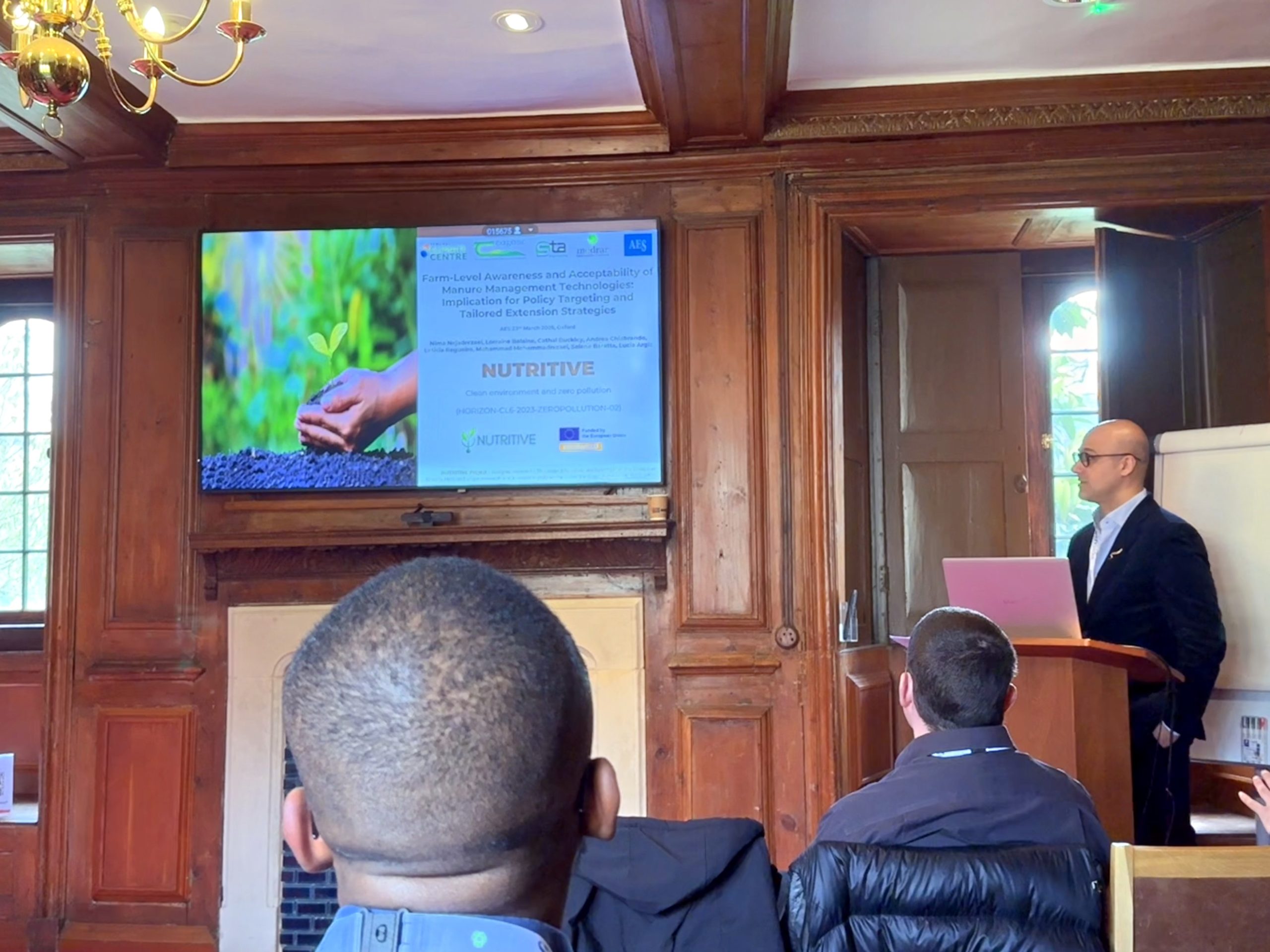
To assess farm level awareness and acceptability of manure management solutions, a mixed methods approach was applied. The qualitative phase involved semi structured interviews with farmers across the dairy, beef cattle, pig, and poultry sectors, using targeted strata to capture diversity in age, gender, production systems, etc. Interviews explored current practices, perceived benefits and drawbacks, barriers to adoption, enabling factors, and potential solutions. This was followed by a stakeholder Delphi study engaging stakeholders across eight categories to achieve consensus on relevant manure management technologies and practices at national and cross-country levels. Insights from these stages, together with findings from an EU level scoping review conducted in another work package, will inform country level focus groups to validate decision making factors and prioritise certain manure management technologies for further analysis.
The research then transitions to a quantitative phase, involving the development of a survey-based framework. A structured survey will be administered to farmers across the target countries, with data analysed using multivariate techniques. Overall, the mixed methods findings will provide guidance to policymakers, technology providers, distributors, and advisory services on strategies to enhance the uptake of manure management technologies and practices at farm level across different regions.
Findings from the regulatory analysis, together with results and recommendations from the mixed methods research, will be synthesised and validated using multi‑actor approach. The validated results, alongside outputs from other work packages, will inform the development of the decision support tool and support the identification of context‑appropriate, effective, and affordable best‑practice solutions. This final phase translates evidence into practical decision support tools and policy relevant benchmarks, enabling the formulation of technical guidelines and recommendations to support future policy development.